Badimo Ke BaoBadimo Ke BaoEconomic development

About Badimo Ke Bao

Economic emancipation, delivered through partnership

Badimo Ke Bao proposes a portfolio of seven linked development initiatives designed to create employment, build productive local assets, expand access to services and strengthen inclusive economic participation.

Our purpose

Badimo Ke Bao partners with stakeholders to advance economic development in Africa. We believe that inclusive growth, community ownership, skills, enterprise and dignified work are essential to economic emancipation.

Our objective is to bridge the economic gap through practical projects that create measurable opportunity for communities that have historically been underserved.

The portfolio is intended for implementation through partnerships with government, development-finance institutions, corporate investors, foundations, NGOs, traditional leadership structures, local communities, and expert partners who deliver each project on the ground.

We work across South Africa and the rest of the African continent — funding government projects, traditional kingdoms and private-sector initiatives alike, because we believe in a culture of inclusivity.

“There is no freedom without economic emancipation.”

Ubuntu

Umuntu ngumuntu ngabantu
A person is a person through other people.

Badimo Ke Bao is grounded in Ubuntu: the understanding that individual dignity is inseparable from the wellbeing of the community around it. Prosperity that lifts one household while leaving its neighbours behind is not prosperity — it is displacement with better paperwork.

That conviction is why every initiative in this portfolio is measured not only by what it returns to funders, but by who it includes: who is employed, who supplies, who owns, and who is still standing when the construction ends.

Development principles

Five commitments that govern every project

01

Economic inclusion

Communities should participate in ownership, jobs, procurement and enterprise opportunities.

02

Partnership delivery

Major projects are delivered with credible technical, funding, public-sector, civil-society and community partners.

03

Local value creation

Prioritise local labour, local suppliers, skills transfer and sustainable operating models.

04

Transparency and accountability

Clear governance, independent financial controls, procurement integrity and measurable reporting.

05

Phased investment

Capital is released against verified feasibility, approvals, milestones and impact outcomes.

Our Director
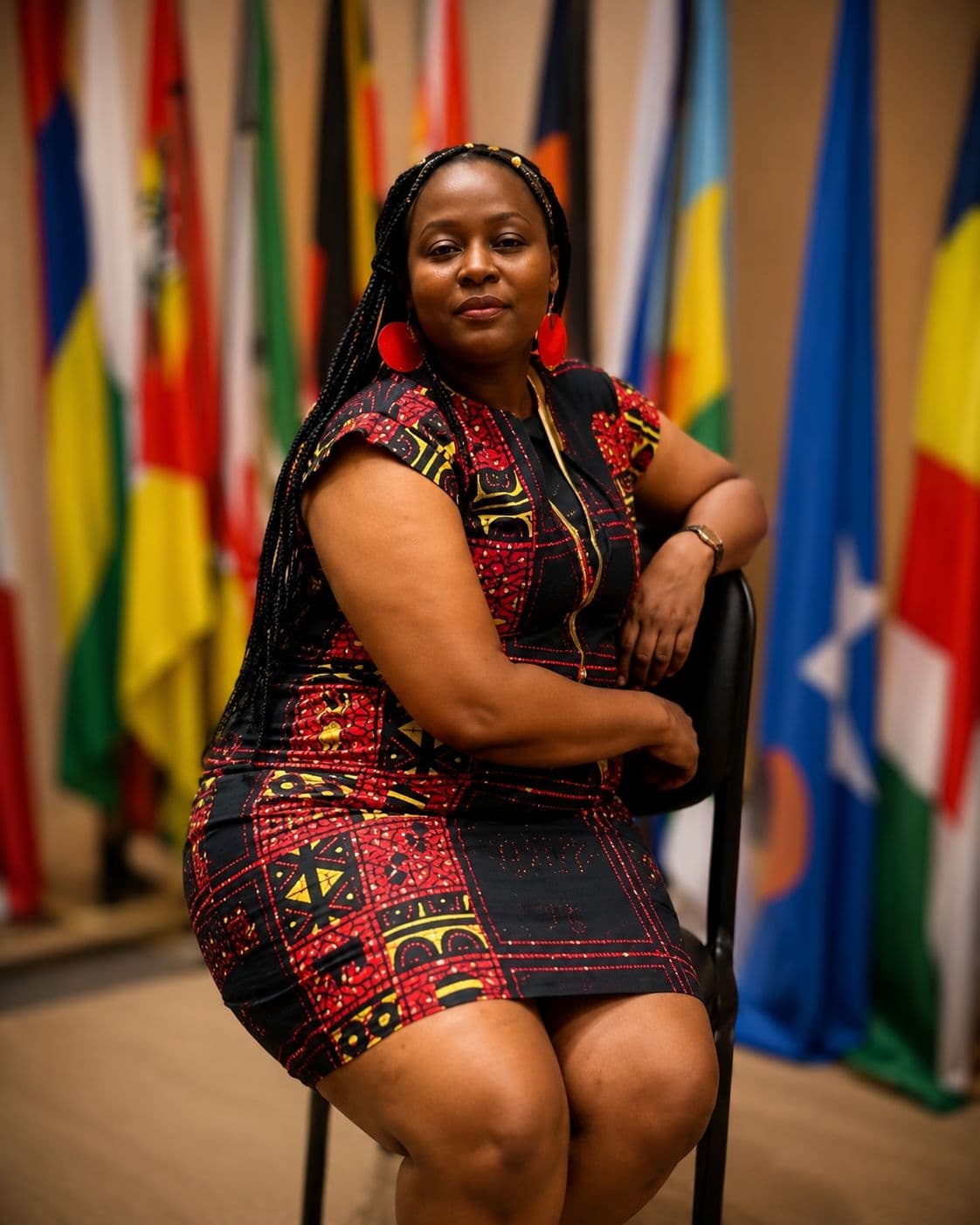
Mme Tawana Malapane, Director of Badimo Ke Bao

Mme Tawana Malapane

Director · Badimo Ke Bao

“I grew up in Katlehong, raised by my grandparents during apartheid in South Africa. They taught me to work hard and to respect people. We did not have much, but we lived well within our community.”

Her working life has been spent inside the institutions that hold African public life to account — first at the South African Human Rights Commission, and for the past decade at the Pan-African Parliament, an organ of the African Union that gives voice to the voiceless and promotes good governance across the continent.

That grounding shapes how this organisation is built. Governance, consultation and record-keeping are not administrative afterthoughts here; they are the disciplines of a career spent administering confidential records, sitting on committees, and representing staff at the highest decision-making tables of continental institutions.

She describes herself as a transformational leader who believes in consultation, and brings the multicultural experience of a working life spent across the continent. Her work today reaches beyond South Africa to governments, traditional kingdoms and communities throughout Africa. She is a proud South African, African and global citizen.

She regards this work as an inheritance rather than an ambition — a baton passed on by her grandparents, by her spiritual mentor Mother Toloki, and by the generation of African leaders who insisted that the continent must unite, develop itself and be an example to the world.

Education & training

  • Postgraduate qualification, University of Limpopo
  • Media Degree / Communications
  • Cataloguing and Classification, University of South Africa
  • Ethics certificate, African Union
  • Advanced Change in Leadership certificate, VUUMA Collaborations
  • Global and International Human Resources Management, NILERD, India
  • Specialised training in information, electronic and knowledge management
  • Leadership certificates and specialised short courses
  • Senior Certificate, Saint Anthony's

Continental experience

  • Botswana
  • Malawi
  • Kenya
  • Senegal
  • Ethiopia
  • Madagascar
  • India

Pan-African Parliament

An organ of the African Union

Ten years, current

  • Human Resources Unit — administration of human-resources and confidential records.

  • Designed systems to streamline electronic and physical record management.

  • Supervises ushers and support staff; volunteers in the library and works across units.

  • Three terms on the PAP Staff Association, representing staff at management meetings and advising senior management and Presidents of the Parliament.

  • Currently serves on the Procurement Committee.

  • Previously served on the committee representing locally recruited staff, and on the grievance and recruitment committees.

South African Human Rights Commission

Research Unit, library services

Five years

  • Union representative for two terms, representing staff issues.

  • Sat on EXCO, the Commission's highest decision-making body.

  • Served on the Asakhane committee mandated to harmonise the Commission after restructuring.

  • Participated in wellness, strategic decision-making and the review of human-resources policy.

  • Represented staff on the grievance and bursary committees.

  • Supervised interns.

“I believe in giving people opportunities. People will compete when opportunities exist. Where there are none, they are left hopeless. As Badimo Ke Bao, we are giving them hope.”

Our approach

Start where delivery is possible. Earn the right to scale.

The approach is phased: start with revenue-generating and implementation-ready opportunities, use early delivery to establish credibility and operating capacity, then scale into long-term housing, retail, learning and health infrastructure.

  1. Phase 1 · 0–6 months

    Readiness

    Confirm company governance; appoint advisers; validate contracts; conduct feasibility studies; identify pilot sites; secure approvals; establish financial controls and project companies.

  2. Phase 2 · 6–18 months

    Early delivery

    Mobilise mining logistics subject to verified contracts; launch food-security pilots; establish the first community business hub and selected school learning-centre pilots.

  3. Phase 3 · 18–60 months

    Scale and construction

    Expand proven programmes; commence approved housing and retail developments; advance specialist-health facility planning and construction subject to clinical, financial and regulatory approval.

  4. Phase 4 · 5–20 years

    Long-term stewardship

    Operate and maintain assets, report impact, strengthen local enterprise participation and reinvest outcomes into sustainable community development.

Immediate next steps

What we are working on now

  1. 01

    Confirm Badimo Ke Bao's legal registration, governance structure, authorised representatives and project ownership.

  2. 02

    Prioritise the mining logistics project for independent contract validation and a detailed capital-and-operating model.

  3. 03

    Select the first geography and pilot sites for food security, business hubs and learning centres.

  4. 04

    Commission feasibility and market studies for housing, Moreke retail development and the specialist health facility.

  5. 05

    Prepare separate investor packs, partner MOUs and project-specific funding requests.